Compare headless and traditional CMS platforms, including benefits, limitations and use cases, to choose the right solution for your website.
Choosing the right CMS is one of the most important decisions when building or redesigning a website.
Many businesses default to familiar platforms like WordPress, while others explore headless CMS solutions for flexibility and scalability. But the real question isn’t which is more popular; it’s which is right for your business.
This guide breaks down the differences between headless and traditional CMS platforms, helping you make a more informed decision.
What Is a Traditional CMS?
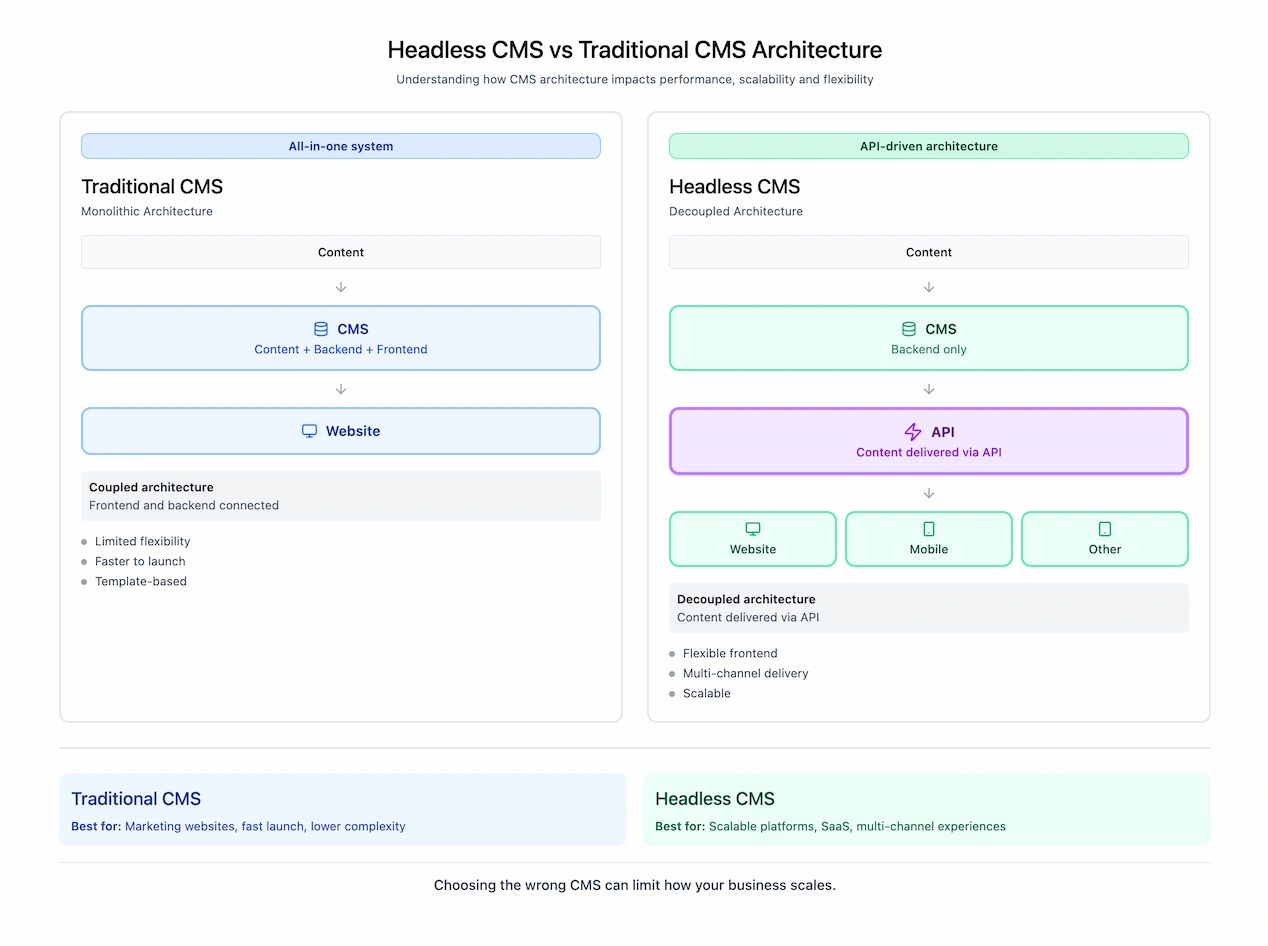
A traditional CMS (also known as a monolithic CMS) combines content management and frontend presentation in a single system.
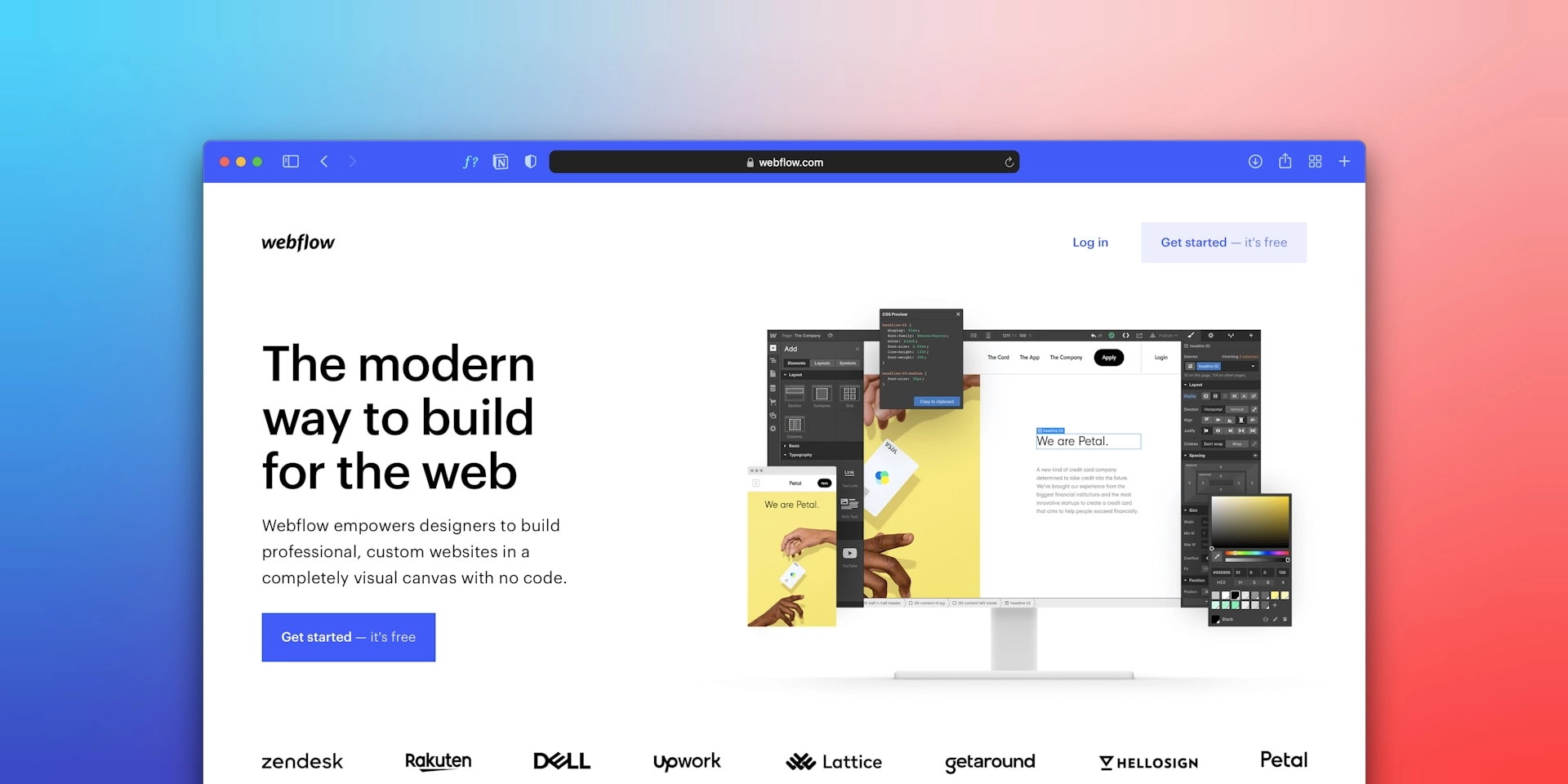
Platforms like WordPress and Drupal allow users to create, manage and publish content directly to a website without needing separate systems.
Everything from templates to content is managed in one place.
Examples of Traditional CMS
- WordPress
- Drupal
- Joomla
What Is a Headless CMS?
A headless CMS separates content management from the frontend presentation layer.
Content is stored in the backend and delivered via APIs to any frontend—websites, mobile apps, or other digital platforms.
This allows developers to build custom frontends using modern frameworks while still managing content centrally.
Examples of Headless CMS
- Contentful
- Sanity
- Strapi
- Prismic
Headless CMS vs Traditional CMS: Key Differences
| Feature | Traditional CMS | Headless CMS |
|---|---|---|
| Architecture | Monolithic (frontend + backend together) | Decoupled (frontend separated) |
| Flexibility | Limited to themes/templates | Highly flexible, custom frontend |
| Performance | Can be slower depending on setup | Optimised performance with modern frameworks |
| Development | Easier to launch quickly | Requires development resources |
| Scalability | Limited for complex systems | Highly scalable across platforms |
Advantages of a Traditional CMS
Traditional CMS platforms are ideal for businesses that need simplicity and speed.
- Quick to launch and manage
- Large ecosystem of plugins and themes
- Lower upfront development cost
- Easier for non-technical teams
For many small to mid-sized websites, a traditional CMS is often the most practical solution.
Advantages of a Headless CMS
Headless CMS platforms are designed for flexibility and scalability.
- Full control over frontend design and performance
- Supports multiple channels (web, mobile, apps)
- Improved site speed and performance
- Future-proof architecture
Businesses building complex platforms or scaling rapidly often benefit from a headless approach.
When Should You Use a Headless CMS?
A headless CMS is typically the right choice if:
- You need a highly customised frontend
- You are building a SaaS or digital product
- You require multi-channel content delivery
- You have access to development resources
It is particularly common in modern product-driven businesses.
When Should You Use a Traditional CMS?
A traditional CMS is usually better if:
- You need to launch quickly
- You have a content-driven website
- Your team is non-technical
- You want lower upfront costs
Many marketing websites still perform effectively using traditional CMS platforms.
Cost Comparison: Headless vs Traditional CMS
| Cost Area | Traditional CMS | Headless CMS |
|---|---|---|
| Initial Setup | Low to medium | Medium to high |
| Development | Minimal | Higher (custom frontend) |
| Maintenance | Ongoing updates/plugins | Ongoing development + hosting |
| Scalability Costs | Can increase over time | More predictable scaling |
The Real Question: Which CMS Is Right for You?
The decision between headless and traditional CMS is not about which is “better” it’s about which aligns with your business goals.
Many businesses choose the wrong platform because they focus on features instead of long-term requirements.
The right decision depends on:
- Your growth plans
- Your technical resources
- Your content strategy
- Your user experience requirements
Our web development approach focuses on aligning platform decisions with business outcomes, not just technical preferences.
Common Mistakes When Choosing a CMS
- Choosing based on trends rather than requirements
- Not considering long-term scalability
- Ignoring content structure and workflows
- Underestimating development requirements
These mistakes often lead to costly rebuilds within 12–24 months.
Wrapping up
Both headless and traditional CMS platforms have their place.
The key is understanding how your website needs to evolve over time and choosing a platform that supports that growth.
If you’re planning a redesign or platform migration, working with an experienced digital team can help ensure the right decision is made from the start.